

Bachelor kimchi is a popular radish kimchi made with Ponytail radish. It retains its crunchiness even after the long fermentation. This mild radish kimchi is fun to make and delicious to eat! I believe everyone should make this at least once.
I often find that Koreans name their kimchi in a very honest way. This particular kimchi called,Bachelor Kimchi, is one of them. This ponytail radish kimchi is one of the popular kimchi, especially among women.
Chonggak means bachelor in Korean and this kimchi was named to honor the bachelors. You might wonder how these weird radish breed can honor the bachelors. Well, here’s the story.
Why is it named Bachelor Kimchi?
In the ancient days in Korea, single men (bachelors) had a very long braided hair. The shape of ponytail radish with their white radish part and the long leafy green part mimics the look of the braided hair of bachelors, so the kimchi was named after. When the single men gets married, they put their braided hair into a bun.
Although the original name for this kimchi is chonggak kimchi (총각김치), some people calls altari mu kimchi (알타리 무김치) instead. Altiari is the name for this particular Korean radish.

I have to say this is perhaps my favorite type of kimchi. It has a deep robust flavor when fully fermented and still holds the crunchy texture that is so irresistible to bite on.
Unlike napa cabbage kimchi, this radish kimchi is not ideal to eat when freshly made. After fermenting for a few days though, you will find the flavor and the texture to be quite addictive. I just can’t get enough.
Ponytail Radish
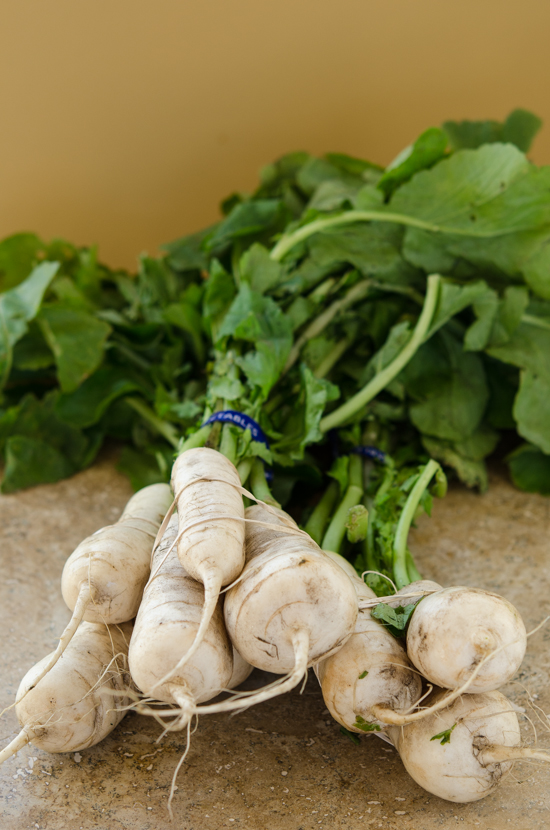
These adorable radishes are called “Altari Moo (알타리 무)”, the inspirational vegetable of our bachelor kimchi. You will find them in many Korean markets. I even found some in my local farmers market the other day.
How to make Bachelor Kimchi (Ponytail Radish Kimchi)
Step 1: Clean ponytail radish
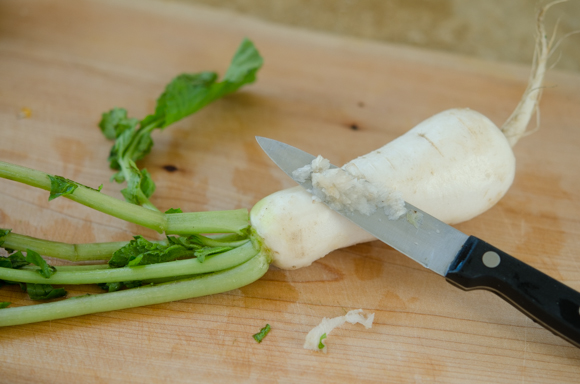
Scrape off the dirty surface of radish. And let’s cut off the hideous pony tail on top of his head. Unless the skin of radish seems to dirty, you don’t need to peel.
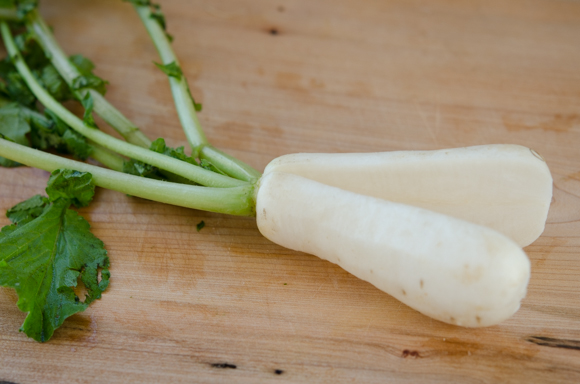
Cut it in half or quarter lengthwise if the radishes are too big.
Step 2: Salt brine to radish
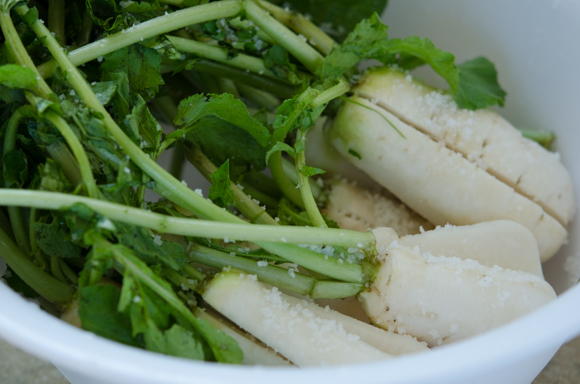
Sprinkle with coarse sea salt and let them sit for 2 hours, turning once or twice during that time.
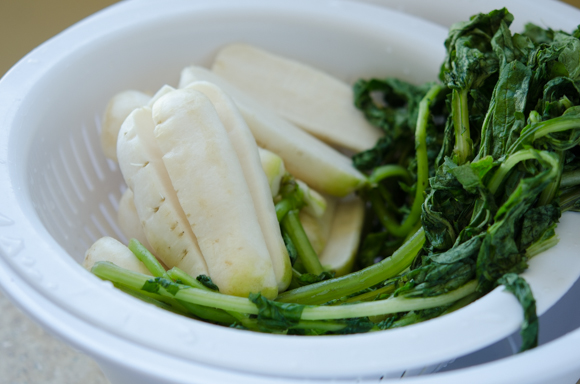
Rinse them well and let them drain in a colander.
Step 3: Make Fish stock and rice paste
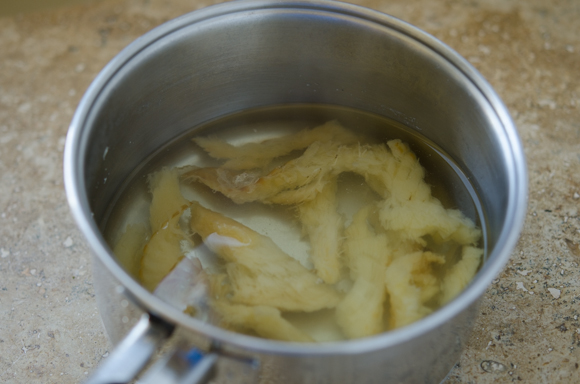
Meanwhile, make a fish stock by using dried pollock slices or anchovies. Reserve 3/4 cup + 2 tablespoon the stock and discard the fish.
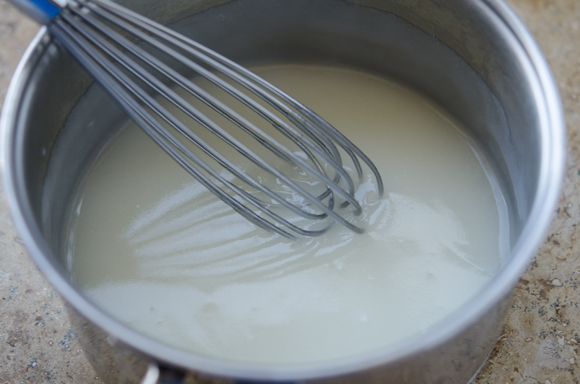
Combine the 3/4 cup stock and 2 tablespoon of sweet rice flour. Let it cook over medium heat until thickens, stirring constantly. It should take about 2-3 minutes. Let cool.
You will only use 1/2 cup of this glue. Freeze the leftover for later use to make other kimchi.
Step 4: Kimchi seasoning paste
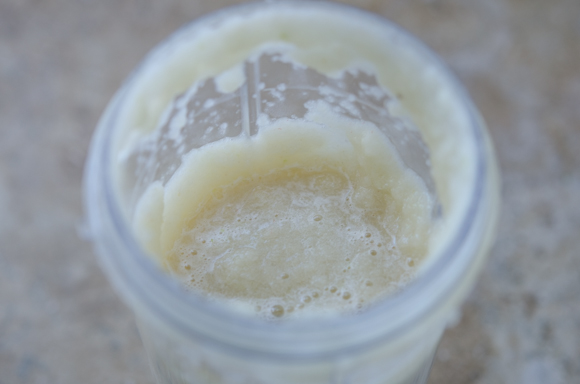
In a blender, puree the onion, garlic, ginger, apple, and 2 tablespoon of the fish stock until smooth.
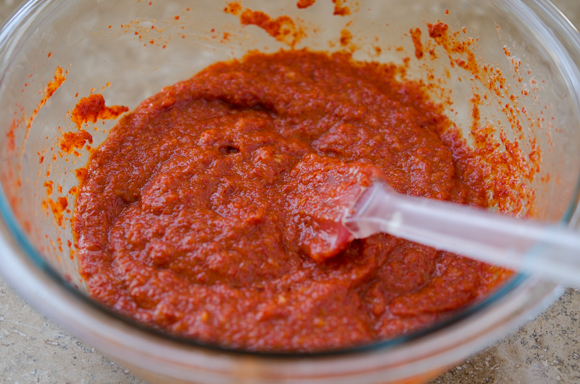
In a mixing bowl, combine 1/2 cup of rice glue, 1/2 cup Korean chili flakes (gochugaru), onion garlic puree mixture, sugar, anchovy sauce, and salted shrimp (saeujeot). Mix well and let it sit for 10 minutes to incorporate.
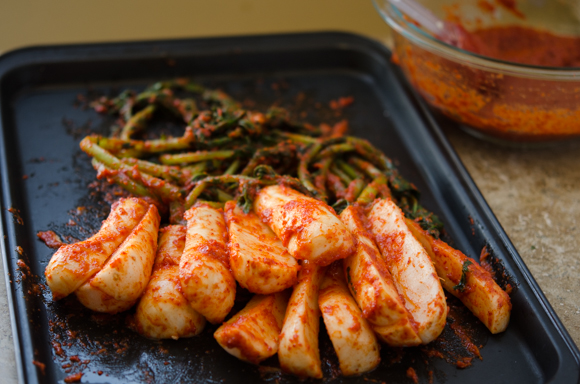
The time has come to assemble the bachelors…!
I used a baking sheet to do the job. Just smother the chili paste mixture onto the radishes until they fully and evenly coated. You might want to do this a small batches at a time to avoid overflowing.
How to ferment and store Korean Radish Kimchi
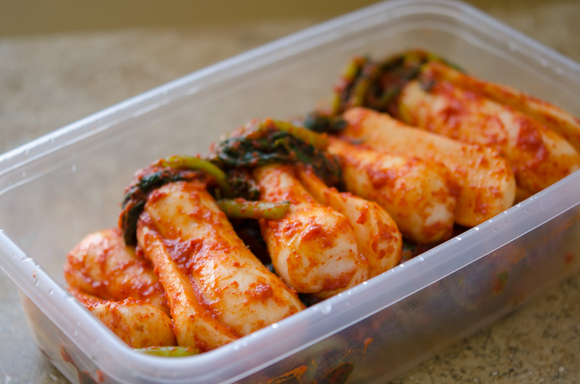
Put kimchi in an airtight container or glass jar and let them sit on the room temperature for 2 days, then transfer to the refrigerator and continue to ferment for 5 more days. They should be so ready to eat.
After a week of fermentation, your kimchi will be just perfect; crunch, robust, and full of bacteria! (I mean the probiotics, you know.)
This bachelor kimchi yields a slightly different flavor than most radish kimchi (Kkakdugi) that people are accustomed to, but this has to be the most beloved radish kimchi of all. Maybe because its name?
So you might wonder and ask;
“Then, are there kimchi called Bachelorette Kimchi?” Well, the answer is “No!”. I hope you get to enjoy these adorable bachelors on your Korean table someday.


